SE00469
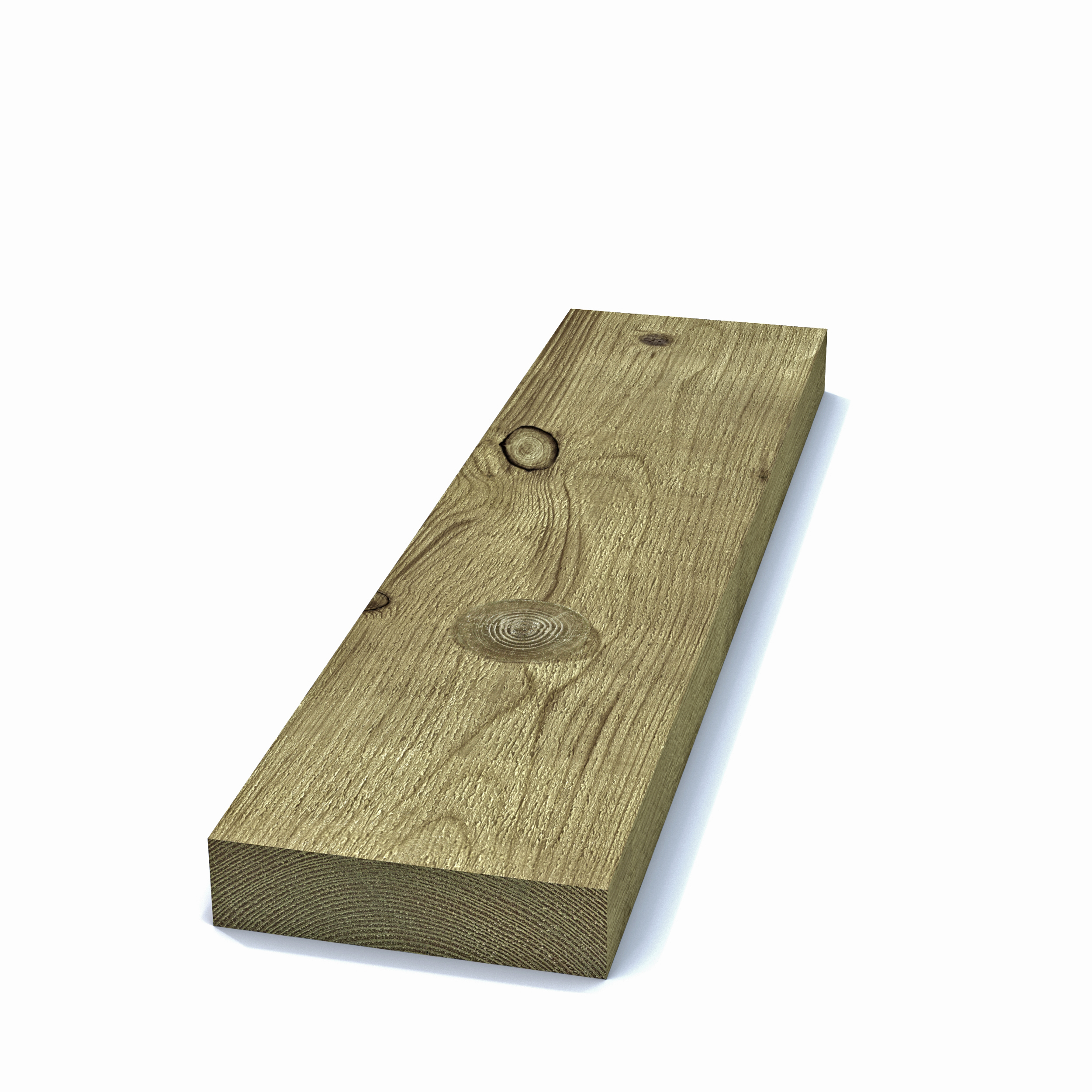
Sawn timber G4-3 (VI) Pine Treated NTR AB Green 38x150
Preservative treated wood is the most common wood material with improved durability. Impregnated wood refers to wood that has been treated in an industrial process and has achieved deep penetration and high absorption of the wood preservative into the wood.
For wood preservation classification the NTR system is used.
Read more
Read more
Properties
| Swedish Wood - ID for generic product type | SE00469 | ||
Swedish Wood - ID for generic product types, which are included in the Swedish Wood standardised product assortment. |
|||
| VilmaBas-ID | VB3025 | ||
Identity used by Swedish building material dealers |
|||
| Wood species - English name according to EN 13556 | Pine | ||
English name for the botanical/latin name and designation in EN 13556 |
|||
| Wood species - botanical name according to EN 13556 | PNSY - Pinus Sylvestris | ||
The Latin name and a 4-letter code used in Europe. |
|||
| Grading according to EN 1611-1 | G4-3 | ||
The grading can be done on all four sides, flat and edge sides = G4. Or only on the two flat sides = G2 (rarely used in Sweden). The grading designations are followed by a number that indicates the quality of the wood, 0-4 with 0 being the highest quality. |
|||
| Commercial Grading of Timber - the "Black Book" (2020) | VI | ||
Trade grading of different quality classes designated by the Roman numerals I - VII.
Also presented in the name of the product type with the value in brackets, for example (V). |
|||
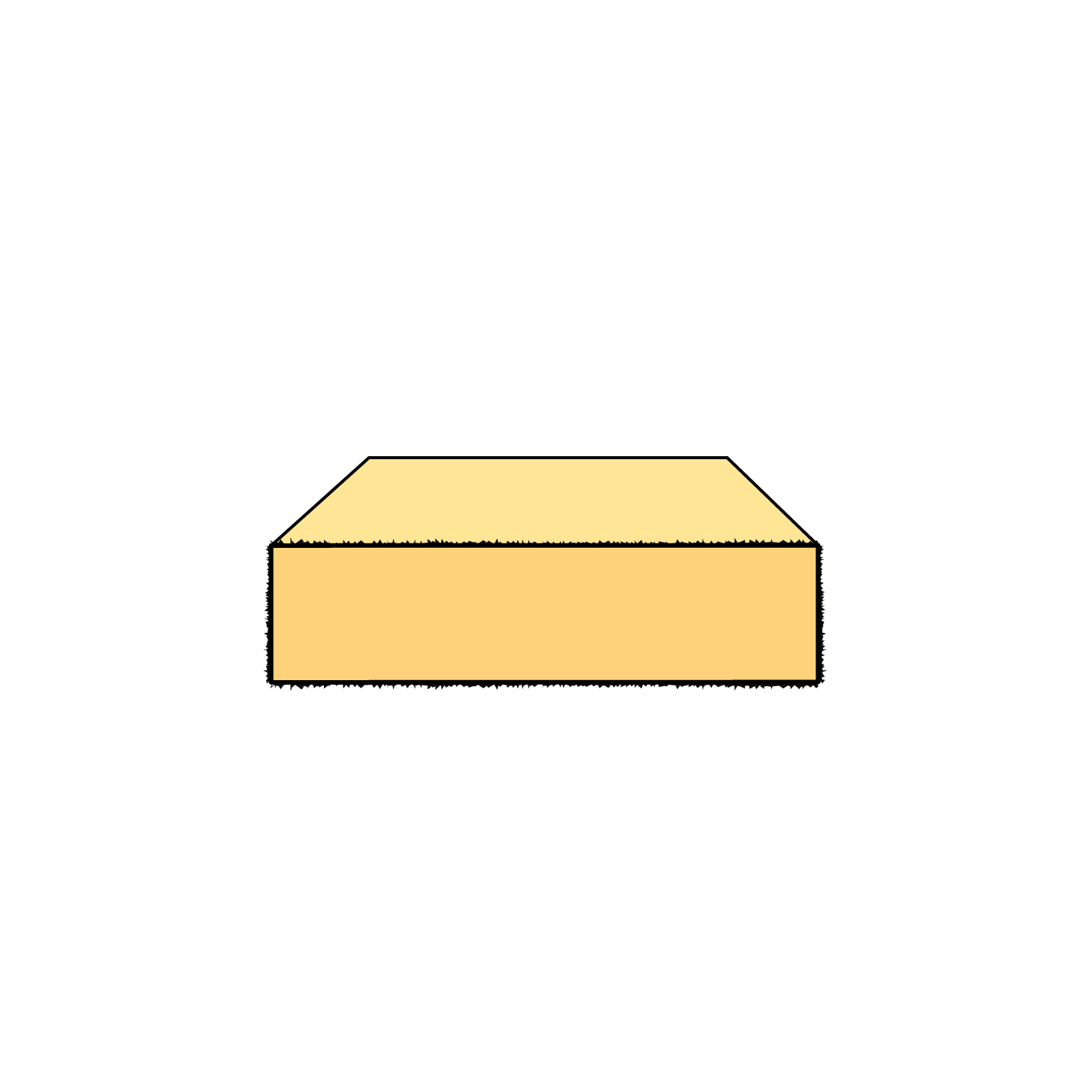
| Surface structure according to Swedish Wood specification | Four sawn sides. | ||
The different side and edge surface structures for a profile type can be produced to meet different technical and appearance requirements. For example, with different techniques and equipment for sawing, planing, grooving and grinding. |
|||
| Thickness according to EN 1309-1 | 38 mm | ||
Thickness measured in a direction perpendicular to the surface, in at least three places |
|||
| Width according to EN 1309-1 | 150 mm | ||
Width measured in a direction perpendicular to the longitudinal axis, in at least three positions |
|||
| Covering width, assembled, according to Swedish Wood specification | 150 mm | ||
The visible width, for example of an individual tongued or grooved board after assembly. |
|||
| Timber consumption per square meter according to Swedish Wood specification | 6,67 rm/m² | ||
For calculating the number of running meters (rm) per square meter (m²) (excluding waste). Based on the product's covering width. |
|||
| Profile area, taking into account design, according to Swedish Wood specification | 0,0057 m² | ||
Calculated on the actual profile of the wood product.
For example, the area of a tongue-and-groove profile needs to be calculated taking into account the tongue-and-groove design. |
|||
| Handling weight per cubic meter according to Swedish Wood specification | 800 kg/m³ | ||
Estimated weight for product handling planning.
Spruce approx. 470 kg/m³. Pine approx. 500 kg/m³.
Glulam approx. 500 kg/m³. Impregnated glulam approx. 600 kg/m³ (dried lamellas after impregnation).
Impregnated wood approx. 800 kg/m³ (not dried) |
|||
| Handling weight per meter according to Swedish Wood specification | 4,56 kg/m | ||
Based on handling weight per cubic meter (kg/m³) and area of profile (m²) |
|||
| Fire classification of construction products and building elements according to EN 13501-1 | D-s2,d0 | ||
Fire classification of all construction products, including products incorporated into building elements (products are considered in relation to their end use) |
|||
| Reaction to fire without testing according to EC Decision 2003/593/EC | D-s2,d0 | ||
Specifies the classes of construction products and/or materials that meet all requirements for the performance characteristic "reaction to fire" without the need for further testing. |
|||
| Wood protection class according to the NTR standard | NTR AB | ||
The Nordic Wood Protection Council (NPWC) issues an industry standard (NTR) for wood protection classes, that is coordinated and connected with the European standards EN 599-1, EN 335-1 for Use Classes and EN 351-1 for Penetration Classes with the purpose of ranking and assessing the durability, treatment and areas of use of wood products. Read more NTR - Wood protection classes |
|||
| NTR Rot Protection Warranty - 20 years | Yes | ||
The members of the Swedish Wood Protection Association provide a 20-year guarantee on NTR impregnated timber. The guarantee applies only to consumers in Sweden and to timber with wood protection class NTR A and NTR AB. Read more Träskyddsföreningen - Rötskyddsgaranti |
|||
| Colour, after impregnation | Green | ||
It is the impregnation liquid used that gives the wood a certain colour after pressure impregnation. For example, if copper salts are used, it gives a green colour. |
|||
| Type of protection treatment against attack by various wood-destroying organisms according to EN 15228 | Ja | ||
Specifies the type of wood preservative treatment and/or wood preservative for protection against rotting fungi and wood-destroying insects which are examples of biological organisms that are target groups for different wood preservative treatments. |
|||
| Use class for wood product according to EN 335 | UC 3 | ||
Defines areas of use in different Use Classes (UC 1 - 5), based on differences in environmental exposure. For example, exposure through soil or water contact. Read more Use classes |
|||
| Penetration class for absorption of wood preservatives according to EN 351-1 | NP5 | ||
Classification of penetration and uptake of wood preservatives into the sapwood and exposed heartwood. Six classes, NP1 to NP6. Example; NP1: No penetration of wood preservatives and NP6: Full penetration into sapwood and at least 6 mm into exposed heartwood. Read more Penetration classes |
|||
| Hardness parallel to the grain direction, according to the Brinell test method | 4 HB | ||
A measure of the hardness of a material. A ball is pressed against the material with a certain force. The impression is measured. calculated and reported according to a Brinell measurement scale. The value is given for wood with a moisture content of 12%. |
|||
| Hardness perpendicular to the grain direction, according to the Brinell test method | 1,9 HB | ||
A measure of the hardness of a material. A ball is pressed against the material with a certain force. The impression is measured and calculated and reported according to a Brinell measurement scale. The value is given for wood with a moisture content of 12%. |
|||
| Thermal conductivity parallel to the fiber direction according to EN ISO 10456 | 0,26 W/m °C | ||
Thermal conductivity is a measure of how heat is transported through a material. The thermal conductivity of wood is greater parallel to the fibers than perpendicular to the fibers. The value is given for wood with a moisture content of 12%. |
|||
| Thermal conductivity perpendicular to the grain direction according to EN ISO 10456 | 0,12 W/m °C | ||
Thermal conductivity is a measure of how heat is transported through a material. The thermal conductivity of wood is greater parallel to the fibers than perpendicular to the fibers. The value is given for wood with a moisture content of 12%. |
|||
| Heat capacity parallel to the grain direction according to EN ISO 10456 | 1650 J/kg °C | ||
Is a measure of the energy that must be supplied to a system under specified conditions for its temperature to increase by one degree. The value is given for wood with a moisture content of 12%. |
|||
| Calorific value parallel to the grain direction according to EN ISO 10456 | 16,9 MJ/kg | ||
A measure of how much energy in terms of Joules (or kilowatt hours) is developed when a certain material/fuel type is burned. The value is given for wood with a moisture content of 12%. |
|||
| Shrinkage, axial direction, in the longitudinal direction of the stem, according to Swedish Wood specification | ßa | 0,4 % | |
Average value for shrinkage of the wood species during drying, from fiber saturation (moisture content approx. 30%) to absolutely dry wood (moisture content 0%). Read more Swedish Wood - Moisture-related wood movement |
|||
| Shrinkage, radial direction across the annual rings, according to Swedish Timber specification | ßr | 4 % | |
Average value for shrinkage of the wood species during drying, from fiber saturation (moisture content approx. 30%) to absolutely dry wood (moisture content 0%). Read more Swedish Wood - Moisture-related wood movement |
|||
| Shrinkage, tangential direction along the annual rings, according to Swedish Wood specification | ßt | 7,7 % | |
Average value for shrinkage of the wood species during drying, from fiber saturation (moisture content approx. 30%) to absolutely dry wood (moisture content 0%). Read more Swedish Wood - Moisture-related wood movement |
|||
| Shrinkage, volume change according to Swedish Wood specification | ßv | 12,1 % | |
Average value for shrinkage of the wood species during drying, from fiber saturation (moisture content approx. 30%) to absolutely dry wood (moisture content 0%). Read more Swedish Wood - Moisture-related wood movement |
|||
| Shrinkage in percent, per percentage unit change in moisture content, according to Swedish Wood specification | 0,26 % | ||
For practical calculations of the average moisture movements of sawn timber of pine and spruce, approximately 7 percent can be used as an average value, for a board sawn in a tangential direction. This corresponds to 0.26 percent shrinkage per percentage unit change in moisture content. Read more Swedish Wood - Moisture-related wood movement |
|||
Select manufacturer of wood products
Availability
- Swedish Wood ID: SE00469
- Valid from: 2024-01-01
Additional information
Must not be used in load-bearing construction.